Status: Completed in January 2021
Client: Foodbank Queensland
Background
Foodbank Queensland sources over 14 million kilograms of food each year to support people in need, it is the largest and most trusted hunger-relief charity in Queensland.
Foodbank Queensland’s member-based model supplies food to over 250 charities and 300 school breakfast programs that distribute food to vulnerable Queenslanders to help fight hunger.
As part of Foodbank Queensland’s commitment to understanding and improving the experience of member charities, Foodbank Queensland engaged Beacon Strategies to map the current (at the time) member journey, explore the experience from the perspective of members and identify opportunities for further improvement.
Approach
To gain an understanding of the experiences of member charities, our approach involved:
Member journey and touchpoint mapping
Developing member personas
Engaging with a sample of Foodbank member contacts
Presenting findings and potential solutions back to Foodbank staff
Our team then worked collaboratively with Foodbank Queensland staff to plan programs of work to support organisational change that prioritised the experience of member charities.
Outcomes
Following completion of the engagement phase with a broad range of Foodbank Queensland’s member charities, our team collated the feedback and presented the findings back to Foodbank Queensland. The next phase of the project was to then collaboratively design and progress the ideas raised by member charities with Foodbank Queensland to tackle hunger in local communities across Queensland.

Community Enterprise Queensland sought support to consolidate existing consultation, project material and program documentation into a clearer format for internal discussion and engagement with potential partners. The work focused on a community nutrition service model for the Torres Strait and Northern Peninsula Area, bringing together information about the proposed service response, delivery requirements, implementation considerations and potential resourcing needs.
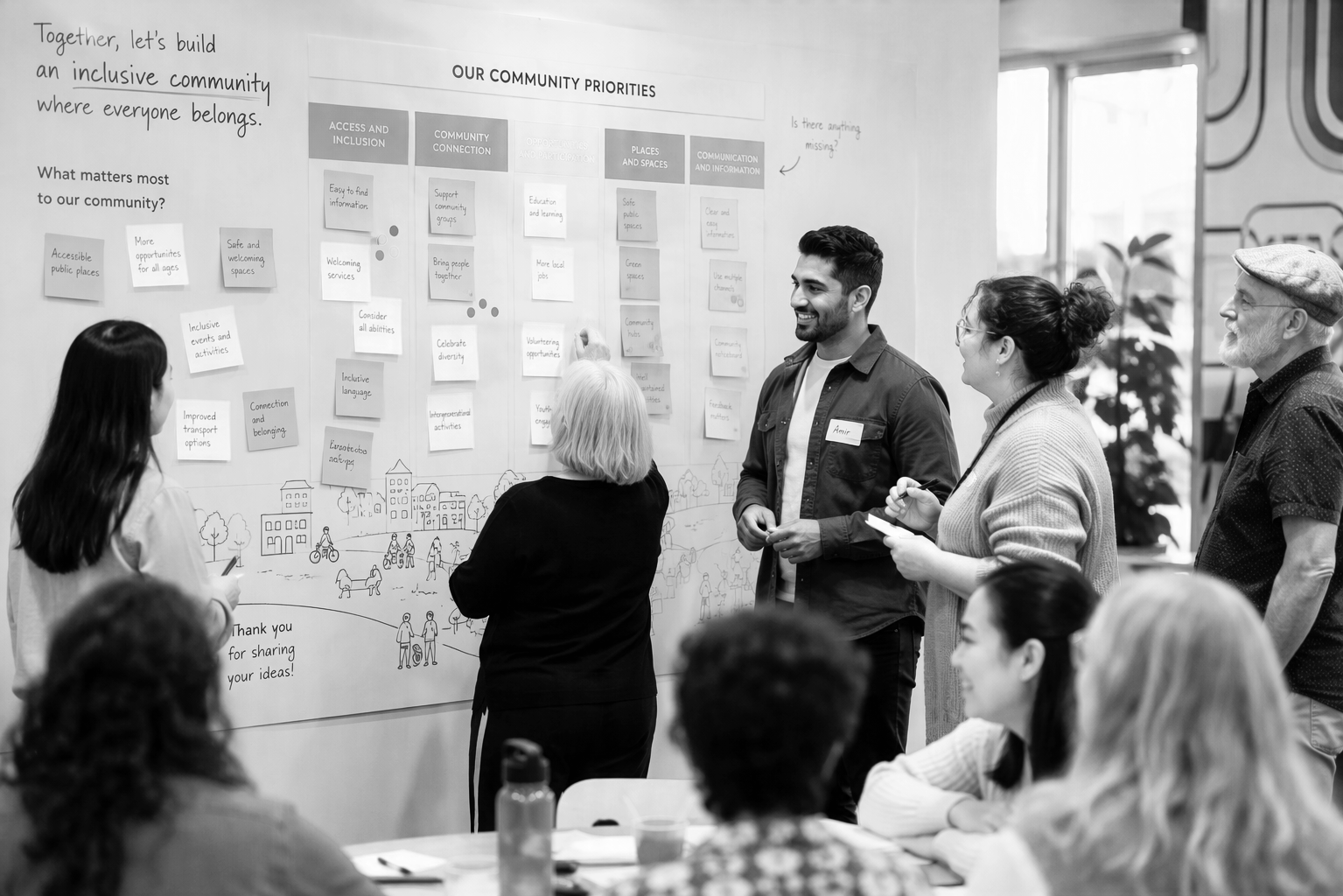
Beacon Strategies supported City of Moreton Bay to undertake disability-inclusive stakeholder engagement to test and refine a draft Disability Access and Inclusion Plan.
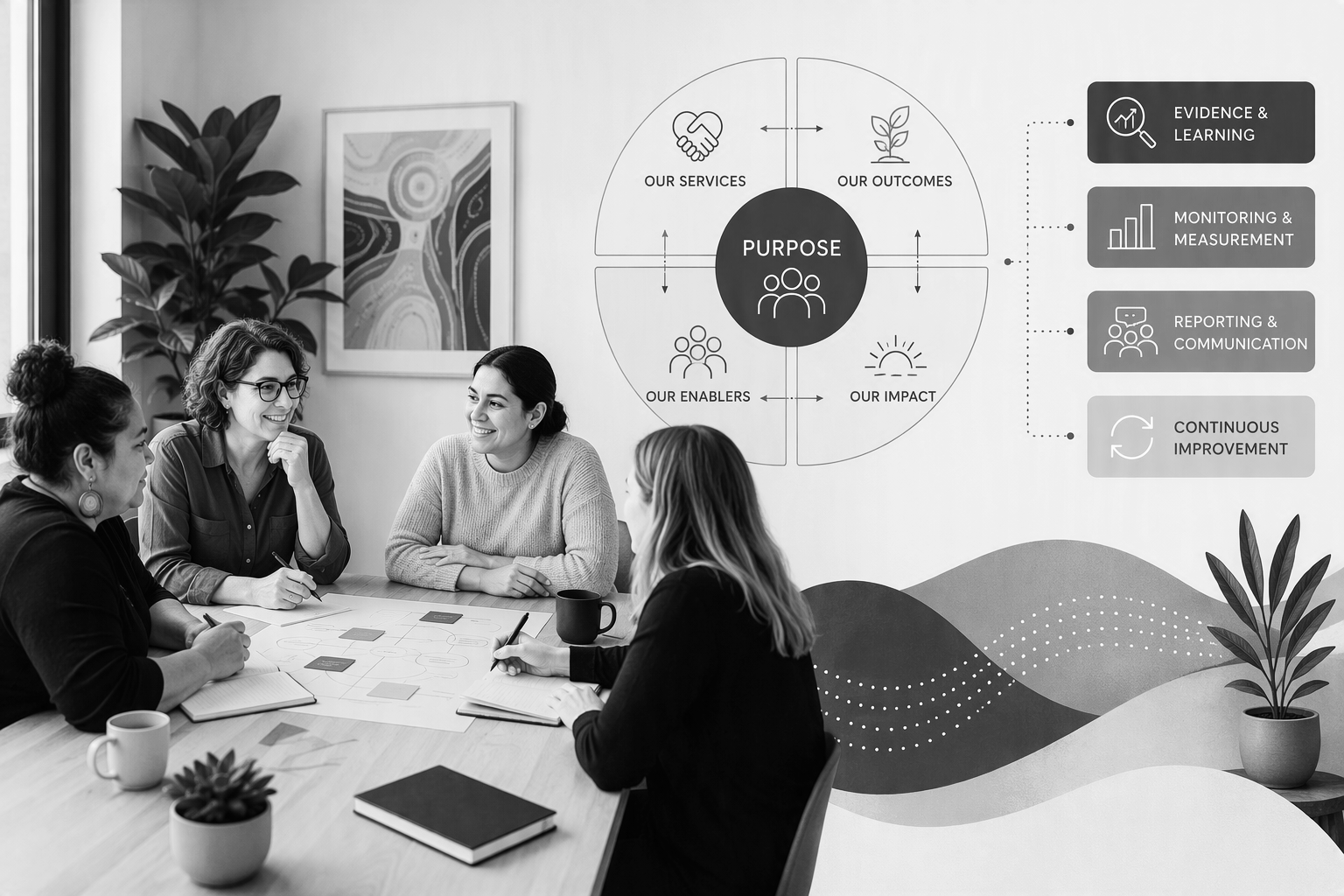
Beacon Strategies provided collaborative coaching and structured support to help Karakan articulate an organisation-wide approach to understanding, monitoring and communicating impact.
Beacon Strategies worked with Footprints Community to develop an organisation-wide approach for defining, understanding and communicating the outcomes of its diverse services.
Beacon Strategies worked with Play Matters Australia to develop a Play and Connection Blueprint, creating a shared framework to guide how the organisation understands, designs and communicates its work with children, families and communities.
Brisbane North PHN commissioned Beacon Strategies to extend its established Digital Health Maturity Assessment into residential aged care. The project aimed to build a clear, evidence-informed picture of digital capability across residential aged care homes and identify opportunities to strengthen how the sector connects with primary care and hospital services.
Residential aged care providers operate across a complex digital environment that includes clinical care systems, medication management platforms, telehealth and information exchange with general practice and hospitals. The assessment considered variation in organisational size, ownership, service models, workforce capability and existing digital infrastructure.
Brisbane North PHN commissioned Beacon Strategies to build an evidence-informed understanding of digital health capability across its commissioned provider network. The work was designed to establish where providers stood, identify gaps and opportunities, and inform implementation of the PHN’s Digital Health Strategy 2026–2028.
How do you move co-design from an aspiration to everyday practice? That was the challenge COORDINARE set out to address when it partnered with Beacon Strategies to develop a practical, organisation-wide co-design toolkit.
Designed specifically for the realities of a Primary Health Network, the toolkit helps staff understand when co-design is appropriate, how deeply it should be applied, and what conditions are needed for it to be successful. Combining evidence-based guidance with practical templates, readiness tools, facilitation resources and worked examples, the toolkit provides a repeatable framework that can be applied across commissioning, primary care development and system collaboration.
The result is a practical resource that strengthens organisational capability and supports more consistent, safe and meaningful engagement with communities, people with lived experience, providers and system partners.
A strategic workforce framework developed to support coordinated, place-based primary healthcare workforce planning across Country Western Australia.
A system-level review examining primary care workforce stability and service access in Kalgoorlie to inform place-based commissioning and service design.